


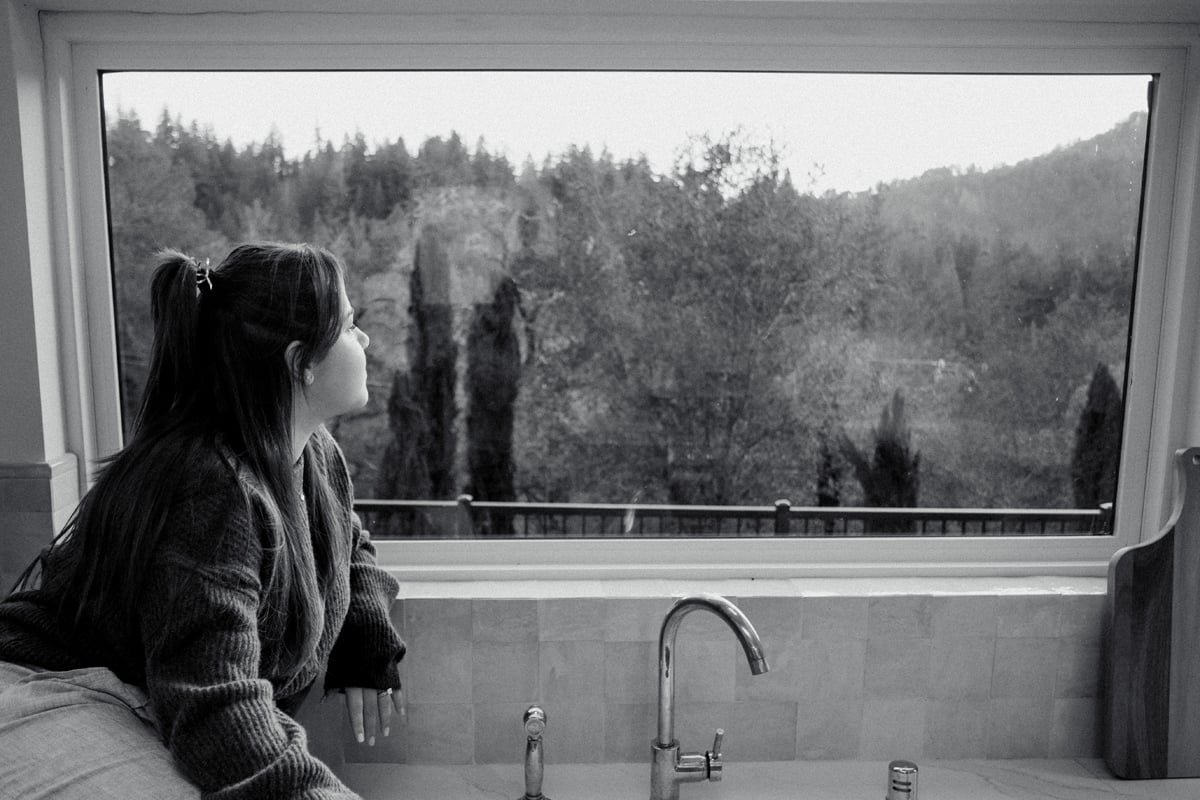
It's August. The air is thick with smoke from fires 100 miles away. My phone buzzes with yet another WatchDuty update. I'm checking the PG&E website to see if they'll shut off power preemptively.
And I'm about to show a property to buyers from Seattle who have absolutely no idea what they're signing up for.
This is the conversation every real estate agent in California should be having. Most don't.
I will. So let's have it.
When you're scrolling through mountain listings, you see majestic redwoods, dappled sunlight, and charming cabins promising you'll "escape from it all."
What you don't see is the community WhatsApp group that functions as a real-time fire tracker, the N95 masks, or the low-level anxiety that settles in every June and doesn't lift until November.
I watched clients lose everything from raging wildfire. Friends lose homes they'd owned for decades. Properties I'd sold reduced to concrete foundations and memories.
And here's what nobody tells you: The fear doesn't leave when the fire does. Every summer now feels like waiting for it to happen again.
Then there's insurance. Many carriers left the market entirely here in CA. The ones who stayed tripled their premiums. I've had buyers sail through inspections and appraisal, reach clear-to-close, and then discover they can't get fire insurance at all, or the premium is $12,000 a year instead of the $3,000 they planned for. Your mortgage might be $2,500 a month. Your fire insurance might be $1,000. That's a number most people never model out before falling in love with a property.
There's also the practical reality of living here that the listing photos simply can't capture.
California law requires 100 feet of defensible space around your home — meaning that gorgeous, overgrown, "natural" property you love? You can't keep it that way. It's a fire hazard and it's illegal now. Clearing and maintaining defensible space costs real time and real money, every single year.
Add in PG&E's preemptive power shutoffs — which can knock out electricity for days at a stretch with little warning — and mountain living requires a level of preparedness that most buyers from the city genuinely haven't considered.
I ask every mountain buyer the same question before we go any further: "On a scale of 1 to 10, how comfortable are you accepting fire risk as part of your daily life?" If the answer is below a 7, we need to talk about other areas. And I mean that.
I could skip this conversation, sell you the house, collect my commission, and watch you list it at a loss two years later when fire season breaks you. I'd rather have the uncomfortable conversation now.
This isn't apocalypse prepping. This is living in rural California.
There's lots to love about living here too. I'm not trying to scare you. The truth is the natural beauty is unmatched. The lifestyle is unlike anywhere else. But fire risk isn't "if" — it's "when."
The people who thrive here are the ones who go in with eyes wide open, financially prepared, emotionally grounded, and genuinely okay with the uncertainty. The ones who don't? They're usually gone within two years.
So if you read all of this and you're still interested — you might actually be built for this life.
Let's talk.
Bailey Copley | BC Estates & Homes
Telling you the truth about California living since 2016.
Check out this article next