

The short answer
Yes — inland heat is safe for parrots and companion birds, as long as the house does the work. As of fall 2026, a typical late-July day in Murrieta runs low 90s in the afternoon and 60s overnight… and most companion parrots are happiest somewhere between 65 and 80. So the question isn't really can my bird live here. It's can this house hold a steady temperature when it's 100 outside.
I asked myself this exact question before we left the Santa Cruz Mountains. Boulder Creek summers are gentle. French Valley summers are… not. So I went looking at houses a little differently than I used to. Not just square footage and finishes. Airflow. Orientation. What happens to that west facing living room at 4pm in August.
What inland heat really feels like
The Temecula Valley heat is dry, it's predictable, and it usually lets go at night. That 4pm breeze comes in like clockwork. Long-term records for Murrieta put a typical late-July day around 92 for the high and 63 for the low — close to a 30-degree swing between afternoon and dawn.
And yes, the triple digits are real. Most summers bring at least a few heat waves where Murrieta, French Valley and Temecula all cross 100 on the same afternoon… sometimes into early October. Those are the days a house either earns its keep or it doesn't.
Here's the part that matters for birds: a steady 82 is easier on them than a house that bounces from 72 to 92 and back. Sudden swings of more than about 10 to 15 degrees in a day are what stress a parrot's system. So the goal isn't a cold house. It's a stable one.
What heat does to a bird (and what to watch for)
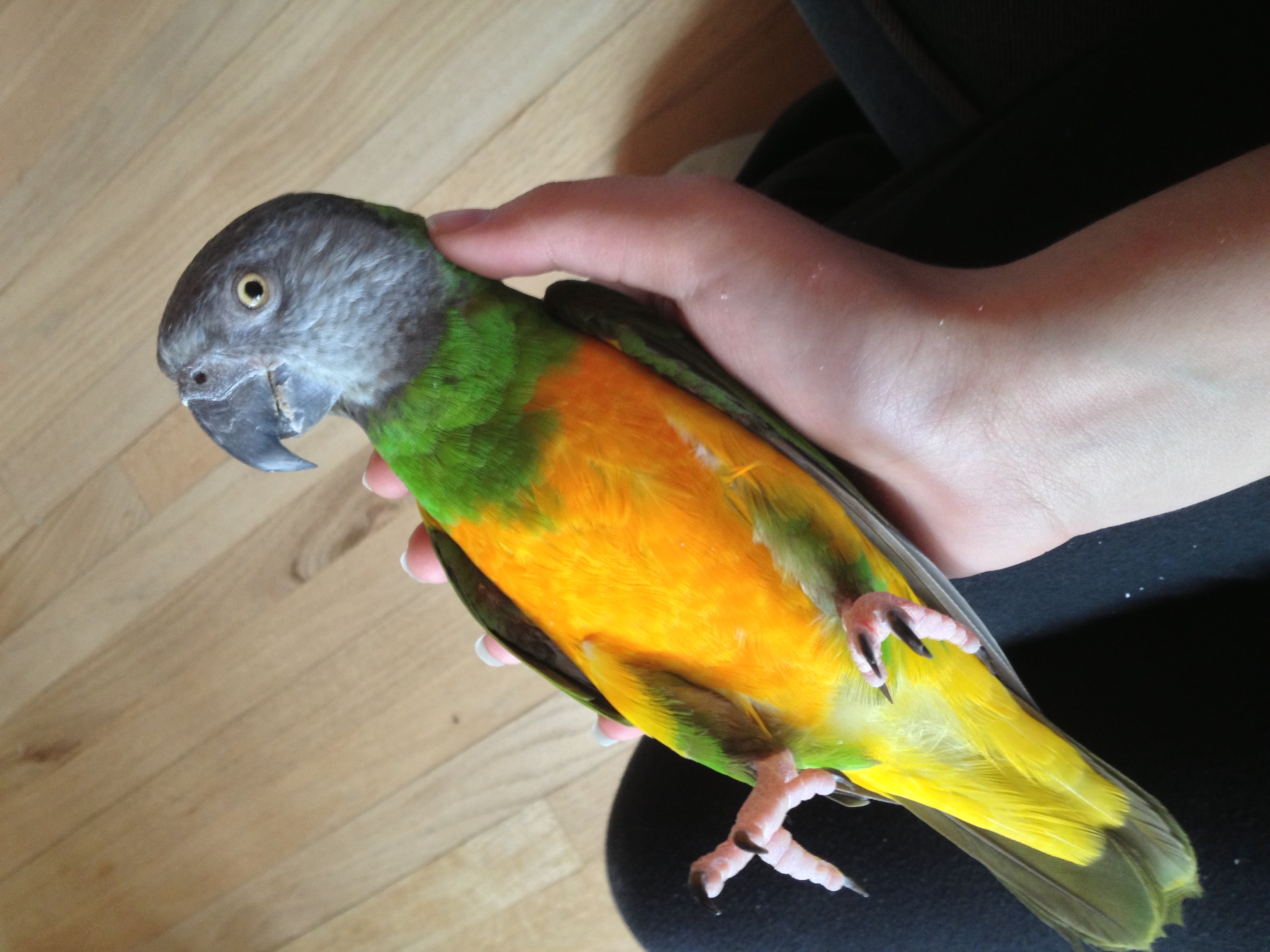
Birds don't sweat. They cool themselves by panting and by pushing blood to bare skin in feet, face, the patch around the eyes. It works… up to a point. Companion birds also don't carry much down feathers, because they live indoors and never needed it. Which means they rely on us for the rest.
The early signs are quiet. Wings held slightly away from the body. Beak open, breathing a little too fast. A bird who's normally chatty going still and flat. The skin around the eyes flushing brighter than usual. If it moves into regurgitating, wobbling, or collapse — that's an emergency, and it's an avian vet call, not a wait-and-see.
What to look for in a home
The air conditioning, first. Central AC isn't optional out here if you have birds. Ask how old the system is, when it was last serviced, and whether it's correctly sized for the house — an undersized unit will run all afternoon and still lose the back rooms (not to mention that wasted efficiency can be very expensive!)
Zoned systems or a ductless mini-split in a bird room are even better, because you can hold that one room steady without cooling the whole house to 68.
Which way the house faces. West-facing rooms take the full afternoon sun, right when it's hottest. If you're picking a bird room, look for something on the north or east side. Walk the house at 3 or 4pm if you can… a bedroom that feels fine at a 10am showing can be a different story by late afternoon.
Windows and shade. Dual-pane, low-E windows make a real difference in how fast a room heats up. So do covered patios, deep eaves, and mature trees on the west side. A newer tract home with builder-grade windows and a bare backyard will feel hotter than its square footage suggests.
A room you can dedicate. The best setups I see have one interior or north-facing room that's the bird room — away from the kitchen, away from direct sun, easy to keep a consistent temperature in. No drafts blowing straight at the cage. No west wall of glass.
A plan for when the power goes out. Heat waves are exactly when the grid gets stressed. It doesn't happen often, but an outage can still occur. A battery backup, a solar system with storage, or even just a generator-ready panel buys you time to keep one room cool. It's not the sexy line item on a listing… but for a bird owner, it's could be one of the most important ones.
Air quality. Inland summers also mean wildfire smoke some years, and bird lungs are far more sensitive than ours. Good HVAC filtration and a room you can seal up and run a purifier in matters as much as temperature.
The stuff nobody puts in the listing
Swamp coolers. Plenty of older inland homes still run evaporative coolers. They're cheap to operate and the extra humidity isn't bad for birds… but they struggle on the muggy monsoon days and can't hold a precise temperature. If a house only has a swamp cooler, I'd budget for a mini-split in the bird room.
Ceiling fans. Great for moving air. Genuinely dangerous if your bird is flighted and gets out of the cage while it's spinning. Worth knowing which rooms have them before you assign one as the bird room. I would recommend changing these to the more modern bladeless options, there are some beautiful ones out there now for cheap!
PTFE. Hot weather means more cooking outside, more air fryers, sometimes a new appliance or even a space heater for winter. Nonstick coatings that overheat release fumes that can kill a bird fast. Sometimes these things have ptfe coatings so you really need to look into what's at the house when at a showing.
Outdoor aviaries. It IS doable here, but full sun in July is a different animal than the coast. Shade cloth, misters, a solid roof on at least part of the flight, and a way to bring birds in during heat waves or poor AQI alerts. And check your city and HOA rules before you build — I wrote a whole post on aviary rules in Temecula, Murrieta and French Valley if you want the details.
So… is it safe?
Honestly? I don't think heat is a reason for a bird person to skip the Temecula Valley. I think it's a reason to shop for a house differently though. The right home here, good air, the right orientation, one steady room, can be just as safe as anything on the coast. Maybe safer, since you'll actually be paying attention.
If you're moving here with birds and want a second set of eyes on a house (or want me to walk a bedroom at 4pm in August with you), I'm always happy to talk it through. No pressure, no pitch. What does your flock need that you're not sure a house can give them?
Check out this article next