


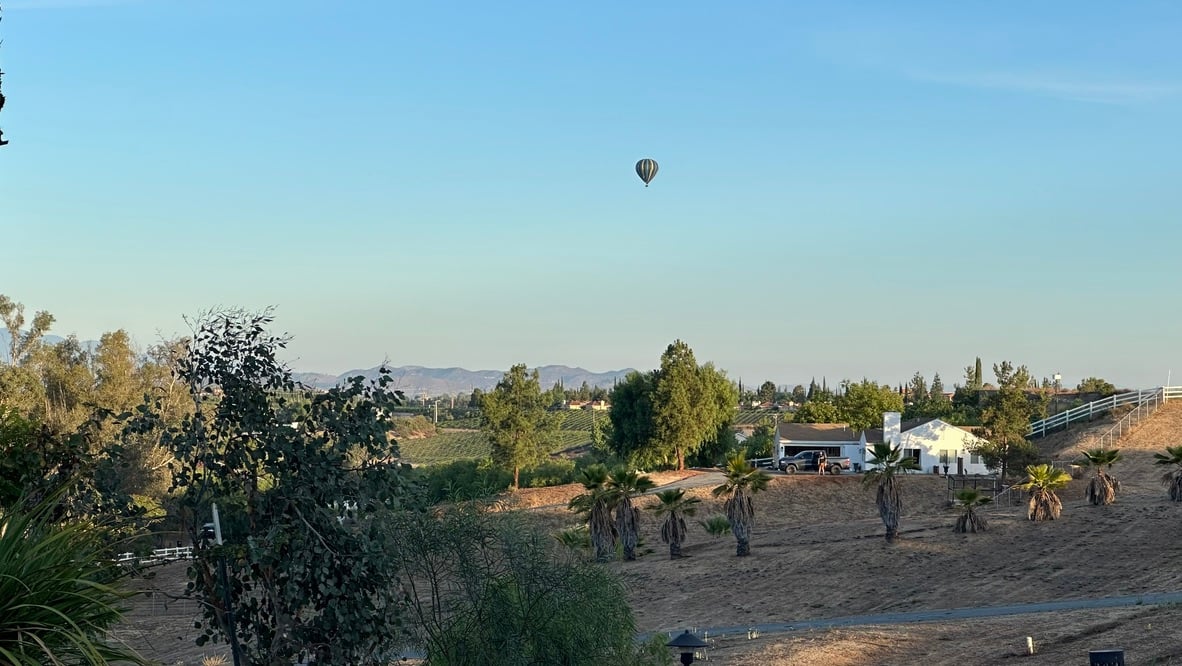
If you own undeveloped land in Riverside County — a vacant parcel, a hillside you've held for years, raw acreage you're not sure what to do with — there's a buyer you may not have considered: the Western Riverside County Regional Conservation Authority, known as the RCA.
The RCA is on a mission to assemble 500,000 acres of protected habitat across western Riverside County under the Multiple Species Habitat Conservation Plan (MSHCP), one of the largest conservation programs in the United States. To get there, they need willing sellers. And they have a clear, established process for working with private landowners — one that's worth understanding if you've ever thought about what your land could become.
Here's what you need to know.
First: This Is Always Your Choice
One of the most important things to understand about the RCA is how they acquire land. The conservation land that makes up this reserve system must be purchased from willing sellers or received as a donation. The RCA does not use eminent domain. They cannot force a sale. Every transaction in this program happens because a landowner chose to engage.
That distinction matters. If you contact the RCA and ultimately decide not to sell, you walk away. The conversation costs you nothing. And if you do decide to sell, you're doing so because the terms made sense — not because you had no other option.
What Kind of Land Are They Looking For?
The MSHCP focuses on land within designated "criteria cells" — roughly 160-acre grid areas identified as biologically significant habitat. These tend to be properties that support coastal sage scrub, southern willow scrub, native grasslands, riparian zones, oak woodlands, or similar ecosystems. The French Valley Wildlife Area and the lands surrounding the Santa Rosa Plateau are examples of the kinds of habitat the RCA is working to connect and protect.
If your land is in unincorporated Western Riverside County or within the city limits of Murrieta, Temecula, or surrounding communities, it may fall within the MSHCP area. You can check the RCA's online mapping tool at wrc-rca.org to see whether your parcel is within a criteria cell.
The Process: What to Expect
The RCA has a straightforward acquisition process for willing sellers. Here's a general overview of how it works:
Step 1: Initial Contact Reach out to the RCA directly at (951) 787-7141 or through their website at wrc-rca.org/sell-land-to-rca. You'll describe your property and express interest in exploring a sale. There's no obligation at this stage.
Step 2: Property Evaluation The RCA will assess whether your parcel meets the biological and geographic criteria for the reserve system. This involves reviewing the property's location relative to existing conserved lands, its habitat value, and its role in completing linkages between protected areas.
Step 3: Independent Appraisal If the RCA determines your property is a good candidate, they will commission an independent appraisal. This appraisal must meet the Uniform Appraisal Standards for Federal Land Acquisitions — commonly called the "Yellow Book" standard. This is a professional, federally-recognized standard designed to establish fair market value. The appraisal process typically takes 60 to 90 days.
Step 4: Offer Once the appraisal is reviewed and accepted, the RCA will present you with a written purchase and sale agreement specifying the purchase price, estimated closing date, and specific terms. You are not obligated to accept. This is the point where many sellers opt to hire a realtor to negotiate.
Step 5: Board Approval and Escrow If you and the RCA reach agreement, the deal goes to the RCA's Board of Directors for approval. Once approved, escrow opens and the transaction proceeds much like a standard real estate sale.
The RCA notes that if you're not familiar with real estate transactions, you may want to work with a realtor or other professional to help you evaluate the offer and navigate the process. That's good advice — having someone in your corner who understands land valuation and contract terms is worth it.
The Tax Picture: Why This Can Be Financially Interesting
Selling to the RCA isn't just about conservation. Depending on your situation, there may be meaningful tax advantages worth discussing with your CPA or financial advisor.
Standard Sale A straightforward sale to the RCA at fair market value is treated much like any other real estate transaction. If your land has appreciated significantly since you acquired it and you've held it more than a year, you'll owe long-term capital gains tax on the gain. The RCA pays fair market value, so you're not leaving money on the table — but you're also not getting a tax break simply because the buyer is a conservation authority.
Bargain Sale This is where it gets interesting. A bargain sale is when you sell your land to a qualifying conservation organization at below fair market value — intentionally. The difference between the appraised value and the price you accept is treated as a charitable donation. That donation may be deductible on your federal income taxes, subject to certain AGI limitations. In a single year, this deduction is generally limited to 30% of your adjusted gross income, with the ability to carry unused amounts forward for up to five years. A bargain sale can also reduce your capital gains exposure on the portion that is sold.
Outright Donation If you choose to donate your land rather than sell it, the full appraised fair market value may be deductible as a charitable contribution on your federal taxes. This is particularly powerful for highly appreciated land where a sale would trigger a large capital gains bill. The deduction rules are complex and depend on your tax situation, so this is one where professional guidance is essential before you act.
Estate Planning For landowners thinking about what happens to their property after they're gone, a conservation transaction can also reduce the taxable value of your estate — potentially meaningful if your heirs would otherwise face a significant estate tax liability.
A note of caution: tax laws change, individual circumstances vary, and none of the above constitutes tax advice. Before making any decisions, work with a qualified CPA and, if needed, a real estate attorney who has experience with conservation transactions.
What Happens to the Land After You Sell?
The land becomes part of the MSHCP reserve system — permanently protected habitat. The RCA manages it in partnership with Riverside County Regional Parks and Open Space District, the Nature Conservancy, California Department of Fish and Wildlife, and other agencies. It won't be developed. In many cases it's open to the public for hiking and wildlife observation.
The species the MSHCP protects include the Coastal California Gnatcatcher, Quino Checkerspot Butterfly, Burrowing Owl, Western Pond Turtle, and dozens of others — plants and animals that depend on connected, unfragmented habitat to survive. When your land links two existing reserves, it doesn't just protect itself. It restores movement corridors that allow wildlife populations to remain viable over time.
Is This Right for You?
Selling to the RCA isn't the right move for every landowner. If your parcel has strong development potential and you want to maximize its market value, that's a legitimate choice. But if you've been sitting on land that isn't generating income, isn't part of a development plan, and holds habitat value — or if you're thinking about your tax situation and your legacy — it's a conversation worth having.
The RCA's acquisition team is easy to reach and genuinely collaborative in their approach. The process is transparent, the pricing is based on independent appraisal, and the outcome is permanent.
The land you've been holding might be exactly what's needed to connect two pieces of a much larger puzzle.
Questions about land values, the selling process, or how conservation transactions fit into a broader real estate strategy? Reach out — this is the kind of intersection between real estate and conservation that I find genuinely worth talking about.
For direct inquiries to the RCA: (951) 787-7141 | wrc-rca.org/sell-land-to-rca
Check out this article next