

Fire insurance in Temecula wine country: what buyers need to know in 2026
Updated November 25, 2026
Yes, you can still insure a home in Temecula wine country in 2026. It just takes more homework, more lead time, and usually more money than it did a few years ago.
The properties people fall in love with out here (rolling acreage, vineyard views, a long gravel drive off Rancho California Road or De Portola) are the same ones insurers look at twice. The good news is that the market is finally loosening a little. The bad news is that "a little" is doing a lot of work in that sentence.
Here's what's actually going on, and what I tell every buyer before we write an offer.
Why wine country gets a second look
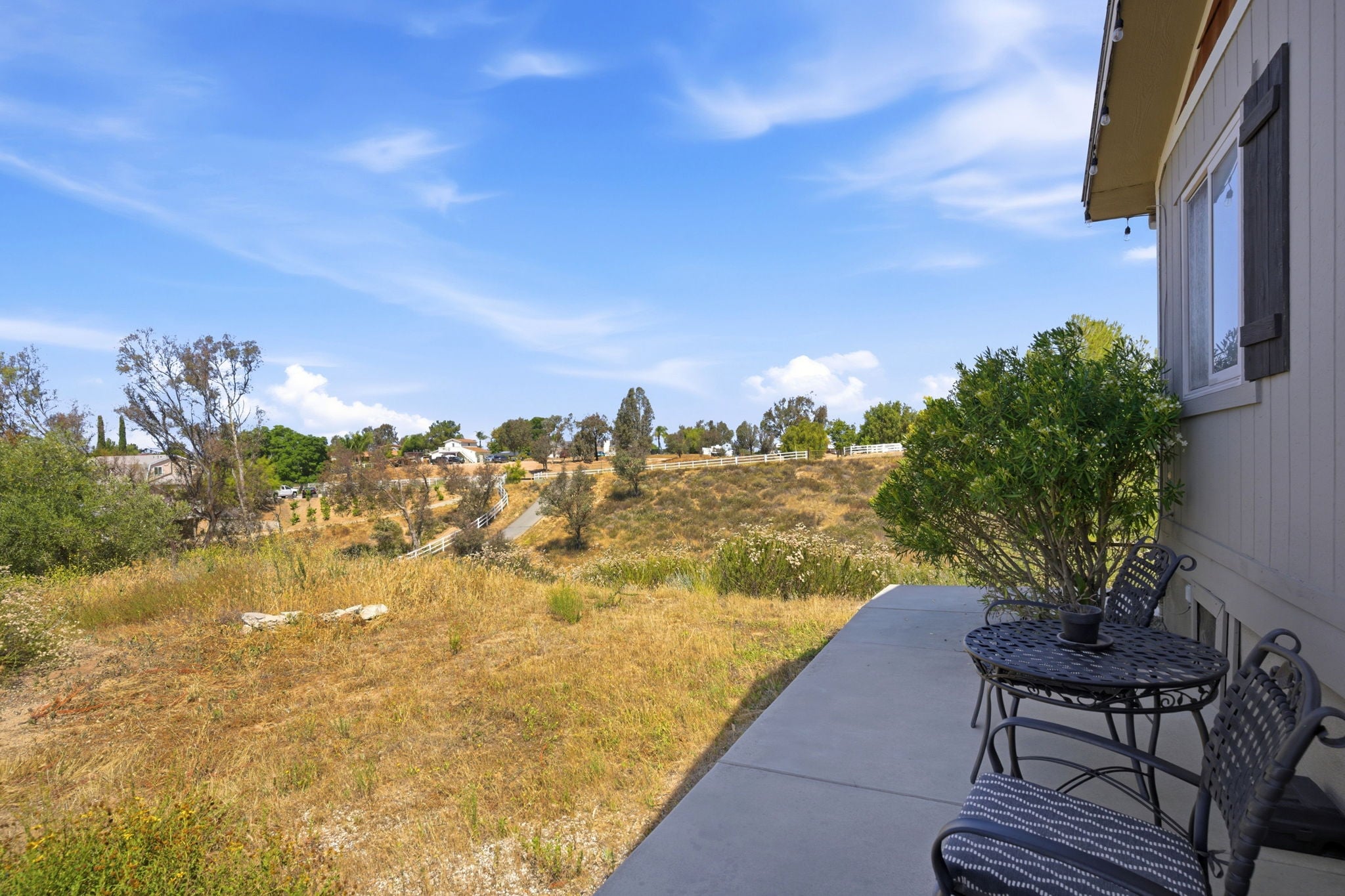
Insurers price the land around a house, not just the house. Wine country is open, hilly, dry for most of the year, and full of grass and brush between parcels. That's the charm. It's also the wildland-urban interface, which is exactly what fire models flag.
CALFIRE redrew the state's Fire Hazard Severity Zone maps in 2025, the first update in about 14 years. Temecula adopted its new map on May 27, 2025. It covers roughly 11,000 acres and about 9,100 parcels across the moderate, high, and very high tiers. Plenty of wine country, plus the unincorporated county land around it, sits in or near those zones.
And people here remember the smoke. The 2024 Airport Fire burned along the Riverside–Orange County line, and homeowners on the western edge of Southwest Riverside County have been finding coverage harder to get ever since.
One thing worth knowing: a fire hazard zone is a map of hazard, not a prediction of loss. Two homes in the same zone can get very different quotes depending on the roof, the vents, the brush, and how far the nearest hydrant is. You can look up any address on the state's fire hazard map viewer.
Where the insurance market actually stands right now
It's more expensive, but doors are starting to reopen.
The expensive part first. Stanford researchers found the average California homeowner's premium rose 84% between the end of 2020 and March 2026, and average deductibles climbed from $1,813 to $2,553 (Stanford). The California FAIR Plan, the state's insurer of last resort, raised rates an average of 29.1% for new and renewing policies starting October 15, 2026 (KQED). In higher-risk areas, the increase can run well above that average.
Now the hopeful part. Under the state's Sustainable Insurance Strategy, insurers can now use forward-looking wildfire models in their pricing, in exchange for promising to write more policies in fire-distressed areas. Farmers, Mercury, CSAA, USAA, and Travelers have all made those commitments (California Department of Insurance). FAIR Plan growth slowed to 1.9% in the second quarter of 2026, the lowest since 2022 (CDI).
In September, State Farm and Allstate both filed to start writing new homeowners policies again. State Farm's filing would initially cover homes that meet the IBHS Wildfire Prepared Home standard (CDI). Both filings were still under review as of this fall, so treat this as "coming," not "here."
Your three realistic options
When a buyer calls me about a wine country property, coverage usually lands in one of three buckets:
Option | What it is | The catch |
|---|---|---|
Standard ("admitted") carrier | A regular homeowners policy from a company licensed and rate-regulated in California | Hardest to get in high-hazard zones; the best rates go to hardened, well-maintained homes |
FAIR Plan + DIC policy | A fire-only FAIR Plan policy, plus a separate "difference in conditions" policy for theft, liability, water damage, and the rest | Two policies, two bills; FAIR Plan covers fire, smoke, and lightning only. DIC covers the rest. This is the combo most homeowners end up with |
Surplus lines (non-admitted) | A specialty insurer that isn't rate-regulated by the state, often used for high-value or hard-to-place homes | Can be pricier, and it isn't backed by the state's guarantee fund if the insurer fails, which means you risk not getting paid out in a disaster |
The FAIR Plan + DIC combo is common out here, and it's not a disaster. It's just clunkier.
My honest advice: work with an independent broker who writes in Southwest Riverside County. A captive agent can only quote their one company. A good broker can shop admitted, FAIR, DIC, and surplus lines in one pass.
How to bring the premium down
California's Safer from Wildfires regulation requires insurers that price for wildfire risk to offer discounts when you reduce that risk (CDI). The list is practical, and a lot of it overlaps with what good land stewardship looks like anyway:
- Defensible space. Brush cleared and trees trimmed to state and local rules, plus a 5-foot ember-resistant zone right around the house.
- Class A fire-rated roof.
- Ember-resistant vents with fine noncombustible mesh.
- Noncombustible siding and enclosed eaves.
- Multi-pane or tempered windows.
- Clear space under decks, and outbuildings moved 30+ feet from the house.
Even the FAIR Plan rewards this. Its wildfire hardening discounts can take up to 16.4% off the wildfire portion of the premium if you qualify for all of them (California FAIR Plan).
If a property is a strong candidate, it may also be worth looking at the IBHS Wildfire Prepared Home certification. That's the same standard State Farm wants to use for its first wave of new policies, so it could open doors that are closed today.
One more thing for my nature people: defensible space doesn't have to mean scraping a property bare. A thoughtful landscape plan with fire-resistant native plants can protect the house and keep it a place where birds want to be.
What I have buyers do before we write an offer
Your lender won't fund the loan without proof of insurance. So in wine country, insurance isn't a closing-week errand. It's part of deciding whether to make the offer at all.
- Get a quote on the address before you fall in love. A broker can give you a rough number from the address, roof type, and year built. It takes a day or two, not weeks.
- Ask the seller for their current policy and premium. It won't transfer, but it tells you who was willing to write it and roughly what it cost.
- Request a CLUE report. It shows the property's insurance claims history for the past several years. Past water or fire claims can affect your quote.
- Look up the fire hazard zone yourself. Check the address on the state's map so nothing in the disclosures surprises you.
- Protect yourself in the contract. Talk with me about how much time you need to secure coverage, and how to structure your contingencies around it.
- Budget for the real number. Plug the actual quote into your monthly payment, not a guess. On some properties, insurance moves the math more than the interest rate does.
The bottom line
Wine country is still insurable. It just rewards the buyers who ask about coverage first instead of last. Get the quote early, know your zone, and budget for the real number, and you can still have the vineyard view without the closing-week panic.
Are you weighing a wine country property and wondering what it would cost to insure? I'm always happy to talk it through.
Bailey Copley | Dreamscape Real Estate | CA DRE #02148293
This post is general information, not insurance or legal advice. Talk with a licensed insurance professional about your specific property.
Check out this article next