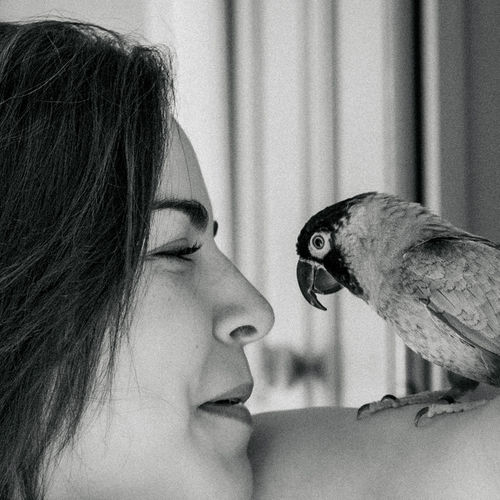


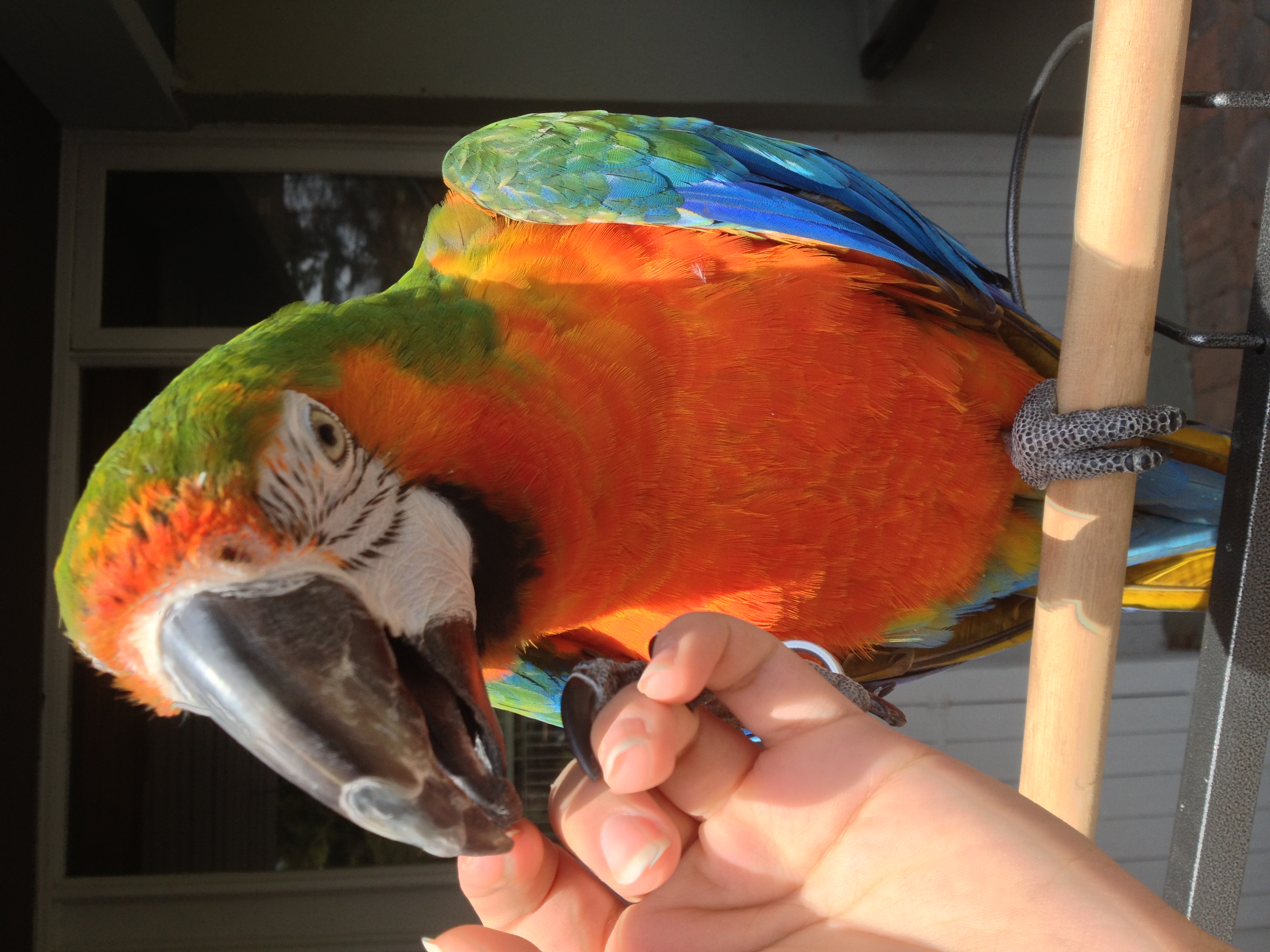
I woke up this morning to hear about the newly emerging Sorrento Fire just north of La Jolla and it prompted me to write this article for my fellow homeowners with feathered friends.
And as I type this I thought, why is this the conversation nobody in the bird community is having with their real estate agent?
I'll bring you to a typical day in peak fire season. Picture this: It is August. The AQI app on my phone has been open more than my email. The sky outside went that particular shade of hazy white that California bird owners know is not actually clouds. I checked my air purifier filter — due for a change — and adjusted Newtie's room setup before I did anything else that morning.
This is the routine. This is what wildfire season looks like when you live with birds in California. And if you are buying a home here and birds are part of your household, it is a material consideration the same way a septic system or a fire zone designation is a material consideration. It affects what you buy, where you buy it, and how you prepare the house before you move in.
Here is what I actually do, and what I look for in properties on behalf of clients who are in the same situation.
WHY THIS MATTERS MORE FOR BIRDS
Bird respiratory systems are significantly more sensitive than ours. The same biology that once made canaries the standard for air quality warning in mines makes parrots and other companion birds highly vulnerable to smoke and particulate. AQI levels that are merely uncomfortable for humans — in the 100 to 150 range — can be genuinely dangerous for birds.
This is not theoretical. It is the reason I have a monitoring setup in Newtie's room and a protocol for when the numbers move.
WHAT I DO AT HOME
Newtie's room has a dedicated HEPA air purifier sized appropriately for the space... not a small unit working too hard in a larger room. I also run a personal AQI monitor so I have actual data rather than a vague sense of whether it smells smoky outside. One step beyond the built in AQI feature on the iphone weather app. The goal is to know before I open a window. That knowledge is infrastructure, not paranoia.
During active smoke events I seal the room as well as I can. Think windows closed, HVAC adjusted so it is not pulling outside air, and I run the purifier continuously. I check the filter more frequently during fire season because a clogged filter is not moving air, no matter what the unit sounds like.
I have also thought carefully about evacuation. If conditions escalate, getting Newtie out safely requires carriers ready, a plan for where we are going, and enough time to execute it. A property on a single egress road in a high-risk fire zone is a different calculus for a bird household than for one without animals.
WHAT I LOOK FOR IN PROPERTIES
When I am evaluating a home for a client who has birds, wildfire season considerations are part of the assessment:
Fire Hazard Severity Zone designation. CalFire publishes these maps and I pull them for every property in fire-adjacent areas. This affects insurance, evacuation likelihood, and the general smoke exposure the household will experience over time.
My clients and I also consider carefully how well the home seals. Windows and doors that create a reasonably tight envelope matter when you need to close up against smoke. Older homes with single-pane windows, large gaps, or poor weatherstripping are harder to seal.
HVAC configuration. Central air that shares ducts with the whole house means any outside air it pulls moves through bird spaces. A property where the bird room can be managed separately — or retrofitted with a mini-split — is meaningfully better for a bird household.
Egress. How many ways out exist from this property? How far to the nearest main road? In a fast-moving fire situation, evacuation time with animals is constrained. Properties with limited egress require more preparation and more alertness during red flag conditions.
THE HONEST THING TO SAY
California is where I live and where I work, and I am not going to pretend wildfire risk is not a real feature of buying property here. What I will say is that it is manageable with the right setup, the right monitoring, and the right property selection in a way that allows you and your birds to live well here.
But it requires actually thinking about it before you buy, not after.
If this kind of thinking is what you want out of your bespoke home buying process, let's have a chat. Reach out on the contact page of my site.
Check out this article next